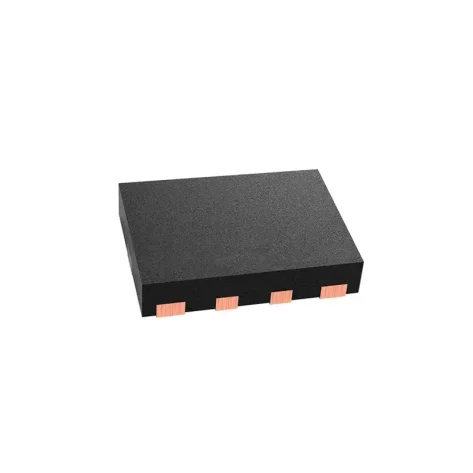
When sourcing memory solutions for embedded systems, procurement managers often face the challenge of balancing technical reliability with cost-efficiency. The SST25WF040-40-5I-SAF, a high-performance memory IC from Microchip Technology, represents a critical component for those managing firmware storage and IoT device development. Unlike general-purpose processors where buyers might focus on the 8086 microprocessor price for legacy systems, modern embedded engineering requires a shift toward non-volatile storage that supports high-reliability industrial controls.
This specific Memory IC is engineered for environments where data integrity is non-negotiable, providing the necessary infrastructure for consumer electronics and medical-grade hardware. By integrating this component into your supply chain, manufacturers can ensure stable firmware execution and reduced operational latency, effectively bridging the gap between hardware constraints and software demands in a dynamic electronic landscape.

The SST25WF040-40-5I-SAF is a specialized Memory IC designed to meet the rigorous demands of modern embedded systems. Utilizing an 8-SOIC package, this component provides a compact footprint that is essential for dense PCB layouts in IoT devices and industrial control modules. Its primary function is to serve as reliable firmware storage, ensuring that critical system instructions are preserved and accessible even after power cycles.
Key technical attributes include:
From an engineering perspective, the integration of this memory component allows for efficient boot-up sequences and stable operation of embedded operating systems. The focus is not merely on storage capacity, but on the speed of access and the endurance of the memory cells over thousands of write/erase cycles.

The versatility of the SST25WF040-40-5I-SAF allows it to be deployed across a wide spectrum of industries. In the realm of IoT devices, it serves as the backbone for storing device identity and communication protocols, ensuring that devices remain connected and functional in diverse network environments. For consumer electronics, such as smart home hubs or wearables, this IC provides the necessary stability for user-interface firmware.
In more critical sectors, the application logic changes:
By matching the specific characteristics of the SST25WF040-40-5I-SAF to these scenarios, engineers can mitigate the risk of system crashes and reduce the need for frequent field updates, thereby lowering the total cost of ownership for the end product.
Effective procurement of electronic components requires more than just comparing unit costs. When evaluating memory ICs, buyers must consider lead times, authenticity, and the stability of the supplier's warehouse network. For those managing large-scale production, the ability to access millions of component models through a single partner can significantly reduce procurement cycles and minimize the risk of production line shutdowns.
Crucial considerations for procurement managers include:
CKXIC supports this process by offering a full suite of services, from chip consignment to excess inventory management. This holistic approach allows electronics manufacturers to optimize their supply chains, reducing costs while maximizing the value recovery of retired assets, ensuring that the procurement journey is streamlined and transparent.
| Evaluation Factor | Consumer Electronics | Industrial Controls | Medical Devices | IoT Infrastructure |
|---|---|---|---|---|
| Reliability Requirement | Medium | High | Critical | High |
| Packaging Preference | Compact (SOIC) | Robust (SOIC/DIP) | Standardized | Ultra-compact |
| Environmental Stress | Low | High (Heat/Vibration) | Controlled | Variable |
| Compliance Standard | RoHS | Industrial Grade | Medical Grade | RoHS/Global |
| Storage Priority | Cost-Effective | Endurance | Data Integrity | Power Efficiency |
The long-term viability of an electronic product is often determined by the lowest-quality component in its bill of materials. In the case of memory ICs, using sub-standard or counterfeit parts can lead to "bit rot" or premature failure of the firmware storage, resulting in devices that "brick" unexpectedly in the field. This is why sourcing original electronic components is a non-negotiable requirement for professional manufacturers.
Quality assurance involves several layers of verification:
By partnering with experienced distributors who understand the unique industry standards of the automotive, medical, and energy sectors, companies can ensure that every SST25WF040-40-5I-SAF integrated into their boards meets the necessary precision and reliability benchmarks.
As we move toward a more connected world, the demand for sustainable supply chain management solutions is increasing. The trend is shifting toward "smarter" procurement, where AI-driven inventory tracking and global sourcing networks reduce the volatility of component availability. Memory ICs are evolving to offer higher densities and lower power consumption to support the next generation of edge computing.
For the modern buyer, the focus is evolving from simple transactional purchasing to strategic partnerships. This involves:
Ultimately, the goal is to build a resilient ecosystem where high-reliability components like the SST25WF040-40-5I-SAF are available on-demand, allowing manufacturers to drive sustainable growth and maintain a competitive advantage in a rapidly shifting technological landscape.
The SST25WF040-40-5I-SAF is primarily used for non-volatile firmware storage, providing a reliable location for system boot code and critical operating instructions in IoT devices and industrial controllers.
The 8-SOIC package offers a balance between a small physical footprint for space-constrained PCBs and ease of soldering during automated manufacturing processes.
This IC is designed for high-reliability applications, meaning it offers better stability and endurance in harsh industrial environments compared to generic consumer-grade memory.
Buyers should verify the supplier's track record, request original certificates of conformance, and ensure the component is sourced from a trusted global distributor with a transparent warehouse network.
Yes, its high-reliability design makes it suitable for medical-tech builds, provided it meets the specific regulatory and quality standards required for that application.
While legacy sourcing might focus on price points for outdated tech, modern IC procurement focuses on supply chain stability, RoHS compliance, and technical compatibility with current IoT architectures.
For professionals seeking to optimize their electronic component procurement, focusing on high-reliability components and a streamlined supply chain is key to long-term operational success.

Hit enter to search or ESC to close