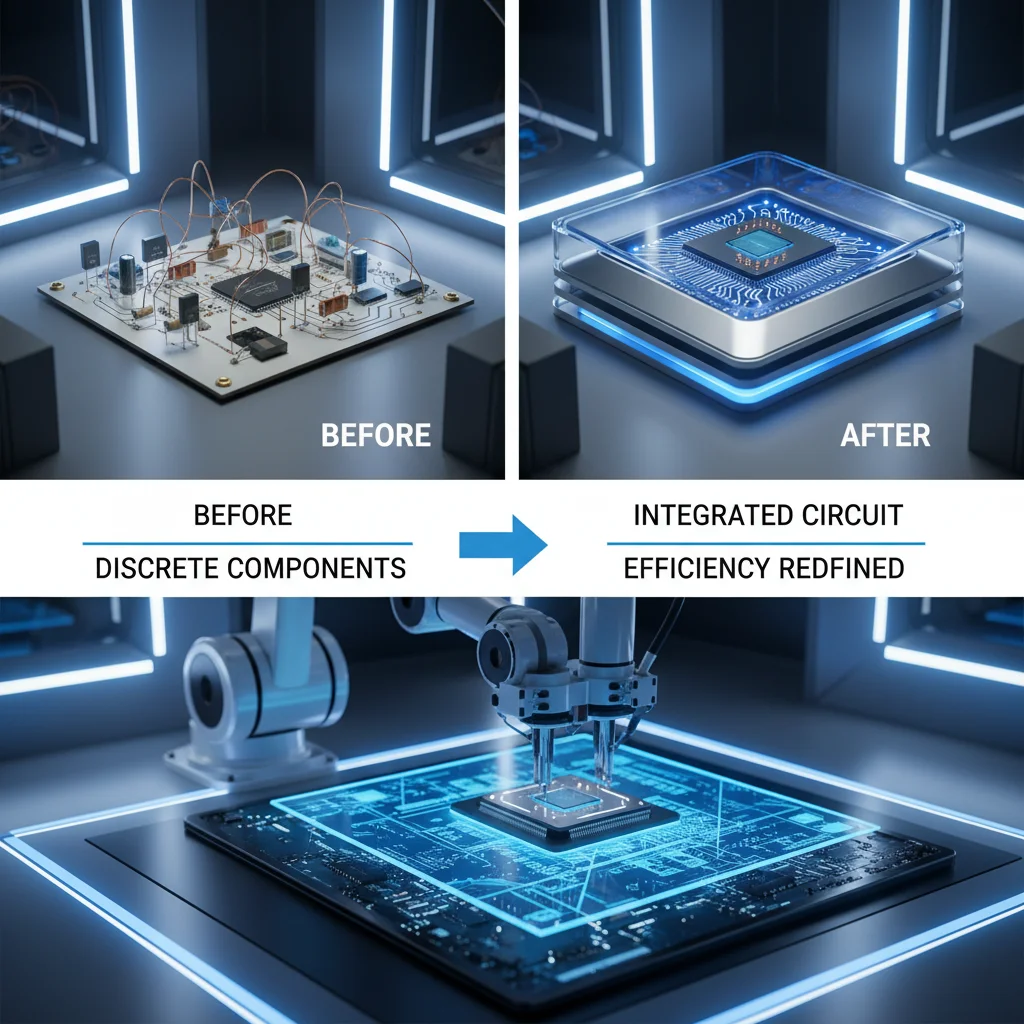
Industrial manufacturing has undergone a profound transformation over the past few decades as automation, robotics, and intelligent control systems have become the backbone of modern factories. At the center of this technological evolution lies a sophisticated network of semiconductor components specifically designed for industrial environments. Unlike consumer electronics, industrial systems must operate under challenging conditions that include temperature fluctuations, electrical noise, vibration, and continuous long-term operation. For this reason, the chips used in manufacturing equipment must deliver exceptional reliability, stability, and durability.
Key semiconductor technologies such as industrial microcontrollers, power semiconductors based on IGBT and MOSFET structures, sensor interface integrated circuits, and industrial Ethernet communication chips play critical roles in supporting advanced manufacturing processes. These semiconductor components allow factories to achieve higher efficiency, improved production precision, real-time monitoring, and seamless communication between machines. As global industries move toward Industry 4.0 and smart manufacturing, these chips are becoming increasingly essential in building intelligent, connected production environments.
Industrial MCUs for Precision Automation Control in Industrial Manufacturing Systems
Industrial microcontrollers are one of the most important semiconductor components in modern manufacturing equipment. These chips serve as the control brains of many industrial machines, coordinating tasks such as motor control, motion positioning, system monitoring, and process automation. Industrial MCUs are specifically engineered to handle demanding operating conditions while maintaining consistent performance and high reliability.
In automated manufacturing systems, industrial MCUs manage complex sequences of operations that must occur with precise timing and accuracy. For example, robotic arms used in assembly lines rely on microcontrollers to control joint movements, regulate torque, and synchronize tasks with other machines. The ability to execute control algorithms in real time allows industrial equipment to maintain consistent product quality and reduce production errors.
Another important role of industrial microcontrollers is system monitoring. These chips continuously gather data from sensors embedded in machines, such as temperature sensors, vibration detectors, and pressure monitors. By processing this data locally, the microcontroller can detect abnormal conditions and initiate protective actions before equipment damage occurs. This predictive capability helps prevent costly downtime and enhances the overall reliability of manufacturing operations.
Industrial MCUs are also widely used in programmable logic controllers and industrial control modules. In these applications, the microcontroller interprets input signals from sensors and switches, processes the control logic, and outputs commands that regulate actuators, motors, and other mechanical components. The stability and responsiveness of industrial MCUs ensure that automated production systems operate smoothly even under heavy workloads.
IGBT and MOSFET Power Semiconductors Driving Industrial Motor Efficiency
Power semiconductor devices are another essential component in industrial manufacturing systems. Among the most widely used technologies are insulated gate bipolar transistors and metal-oxide-semiconductor field-effect transistors, commonly known as IGBTs and MOSFETs. These power devices are responsible for controlling and converting electrical energy in high-power industrial equipment.
Electric motors are widely used throughout manufacturing facilities to power conveyors, pumps, compressors, robotic systems, and machine tools. IGBT and MOSFET power semiconductors enable efficient motor control by regulating voltage and current during motor operation. Through sophisticated switching mechanisms, these devices convert electrical power into precisely controlled energy flows that drive motors with high efficiency.
IGBT devices are particularly suitable for high-power applications where large amounts of electrical energy must be controlled. They are widely used in variable frequency drives, which adjust motor speed by controlling the frequency and voltage supplied to the motor. Variable frequency drives help factories reduce energy consumption while improving process control and mechanical precision.
MOSFET power semiconductors are often used in applications requiring high switching speed and efficient power conversion. These devices are commonly integrated into power supplies, motor drivers, and energy management systems within industrial machines. Their ability to operate with minimal energy loss contributes to improved system efficiency and reduced heat generation.
As manufacturing facilities increasingly adopt energy-efficient technologies, power semiconductor solutions continue to evolve. Advanced materials and device architectures are enabling higher power densities, faster switching speeds, and improved thermal performance, allowing industrial equipment to operate more efficiently while maintaining reliability.
Sensor Interface ICs Capturing Real-Time Operational Data in Smart Factories
The rise of smart manufacturing has dramatically increased the importance of sensors and data acquisition within industrial environments. Sensor interface integrated circuits serve as the bridge between physical sensing devices and digital control systems. These chips convert analog signals from sensors into digital data that can be processed by industrial controllers and monitoring systems.
In modern factories, a wide variety of sensors are deployed to monitor machine conditions, production parameters, and environmental factors. Temperature sensors measure thermal conditions within equipment, vibration sensors detect mechanical irregularities, pressure sensors monitor fluid systems, and position sensors track the movement of mechanical components. Each of these sensors generates electrical signals that must be accurately captured and interpreted.
Sensor interface ICs provide the necessary signal conditioning and conversion functions that allow these signals to be processed reliably. They amplify weak sensor outputs, filter noise, and perform analog-to-digital conversion so that the data can be analyzed by microcontrollers or industrial computers. This process ensures that the information collected from sensors is both accurate and stable.
The ability to gather real-time operational data has become essential for predictive maintenance strategies. By continuously analyzing sensor data, manufacturing systems can detect early signs of wear or malfunction in machinery. Maintenance teams can then address potential problems before they escalate into major equipment failures. This approach significantly reduces downtime and improves overall production efficiency.
Sensor interface technology also supports advanced industrial analytics. Data collected from machines can be transmitted to centralized monitoring platforms where sophisticated algorithms analyze performance trends and optimize production processes. As a result, factories can operate with greater transparency and higher levels of operational intelligence.
Industrial Ethernet Chips Enabling Reliable Factory Communication Networks
Communication networks form the backbone of modern automated manufacturing systems. Machines, controllers, sensors, and monitoring platforms must exchange information continuously in order to coordinate production activities and maintain operational efficiency. Industrial Ethernet chips provide the hardware foundation for these communication networks.
Unlike conventional networking solutions used in office environments, industrial Ethernet systems must operate reliably in challenging factory conditions. Electromagnetic interference, electrical noise, and long cable distances can disrupt communication signals if the network hardware is not properly designed. Industrial Ethernet chips incorporate specialized features that ensure stable and deterministic communication in these environments.
In automated production lines, industrial Ethernet networks allow machines to exchange data with extremely low latency. This capability is essential for time-critical control applications where precise synchronization between devices is required. For example, robotic systems working together on an assembly line must coordinate their movements with millisecond accuracy to avoid collisions and maintain efficient operation.
Industrial Ethernet technology also supports high-speed data transmission for monitoring and diagnostics. Machines equipped with sensors and controllers can transmit large volumes of operational data to centralized control systems. Engineers and plant managers can then analyze this information to monitor equipment performance, detect anomalies, and optimize production workflows.
As factories become more connected, industrial Ethernet networks are increasingly integrated with cloud-based platforms and industrial Internet of Things architectures. This integration allows manufacturing systems to benefit from advanced analytics, remote monitoring, and predictive maintenance capabilities. Industrial Ethernet chips therefore play a vital role in enabling the digital transformation of manufacturing industries.