Why is a digital buffer ic essential in complex PCB layouts?
A digital buffer ic is used to strengthen weak digital signals that must travel across long traces or drive multiple loads. In modern digital ic design, maintaining signal "squareness" is critical for timing. Without a proper digital logic ic for buffering, signals can become distorted, leading to data errors. Our buffer ensures that even if there is a slight digital delay ic due to trace length, the logic levels remain sharp and clear.
How does this digital logic ic improve fan-out capabilities?
The primary role of this digital logic ic is to provide high current drive to multiple downstream components. When a single processor output needs to talk to several memory chips, a digital buffer ic prevents the signal from drooping. This is a fundamental concept in digital ic design, where the buffer acts as a repeater. It can also be used to intentionally introduce a small digital delay ic to synchronize signals in high-speed parallel buses.
What role does digital ic design play in reducing propagation delay?
Our advanced digital ic design focuses on minimizing the internal transit time of the signal. While every digital buffer ic introduces some latency, our chips are optimized to keep this digital delay ic to a minimum (often sub-nanosecond). This ensures that the digital logic ic does not become a bottleneck in the system, allowing for higher clock speeds and more responsive electronic devices in consumer and industrial markets.
Can a digital delay ic be used for clock skew correction?
Yes, a specialized digital delay ic is often used alongside a digital buffer ic to correct clock skew on a PCB. By intentionally delaying one clock line to match another, the digital logic ic ensures that data is latched at exactly the right moment. This level of precision is a key outcome of our professional digital ic design process, providing engineers with the tools they need to solve complex timing issues in multi-layered circuit boards.
Is the digital buffer ic compatible with different voltage logic levels?
Our digital buffer ic often includes level-shifting capabilities, allowing it to translate between 1.8V, 3.3V, and 5V systems. This makes it a versatile digital logic ic for modern mixed-voltage designs. By integrating this functionality during the digital ic design phase, we provide a component that not only manages signal strength but also bridges different power domains, potentially replacing a dedicated digital delay ic or translator chip.
How does the digital buffer ic handle high-capacitance loads?
Driving high-capacitance loads can slow down signal transitions, but our digital buffer ic is designed with high-current output stages to overcome this. This ensures that the rise and fall times remain fast, adhering to strict digital ic design guidelines. Even when driving long cables that might naturally act as a digital delay ic, our digital logic ic maintains a clean waveform, preventing the data corruption that often plagues high-speed communication lines.
What packaging options optimize the digital ic design for space?
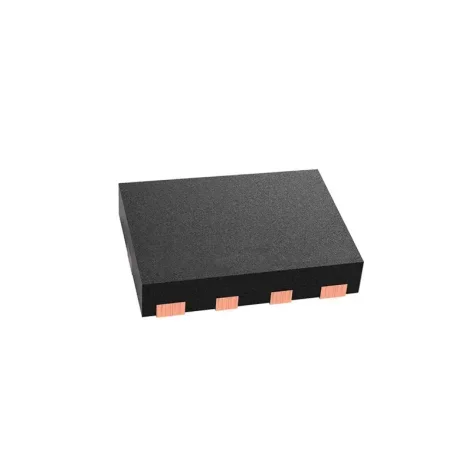
To support compact digital ic design, our digital buffer ic is available in ultra-small packages like SOT-23 and SC-70. These tiny footprints allow the digital logic ic to be placed exactly where it is needed—right next to the signal source. This reduces the risk of EMI and minimizes the accidental digital delay ic caused by long PCB traces, making it ideal for mobile devices and high-density industrial modules.
Why specify our digital logic ic for your next production run?
Specifying our digital logic ic ensures that your product is built with components that prioritize signal integrity. Our digital buffer ic is a result of years of expertise in digital ic design, offering unmatched reliability and performance. Whether you need a simple signal boost or a precise digital delay ic for timing alignment, our products provide the high-quality solution that global buyers demand for their electronic manufacturing projects.